We hired our way into going slower
Having customers isn't product-market fit. We scaled too early and underestimated the cost of managing and communicating across a bigger team. Hiring won't patch your weak spots: a founder's weak spot is the company's.

At my first startup, we started hiring as soon as the seed round closed. Engineers, a designer, marketing, sales, one seat at a time. We went from three or four people to twenty-something, and it finally looked like a real company.
The vision never changed in those years, but the product kept changing shape. Then ChatGPT landed at the end of 2022, the whole market tilted toward LLMs, and the ground moved under everyone.
It looked like everything was getting better. It took me a while to notice that the more people we had, the slower we ran.
Can you hire your way to go-to-market?
I came from academia. My job was to turn the founder’s vision into something real, so I ran the team and the product.
In the beginning we sold it ourselves, and we did land customers. So we hired a salesperson to scale that up.
Later I understood it was a false product-market fit (PMF). Having customers isn’t the same as having PMF. Real PMF is when the market pushes you forward: customers chase you, and new requests chase you before you’ve finished the last ones. We never had that feeling. We had customers we’d worked hard to win.
And believing too early that you’ve found PMF is more dangerous than knowing you haven’t. If you know you haven’t found PMF, you keep looking. If you think you have, you start building a machine to scale something that isn’t there.
Our first salesperson didn’t work out. Our explanation at the time made sense: an early startup has no playbook, the market was shifting every month, every deal had to start from a cold lead, and we were selling AI infrastructure, which is hard to explain even when you built it.
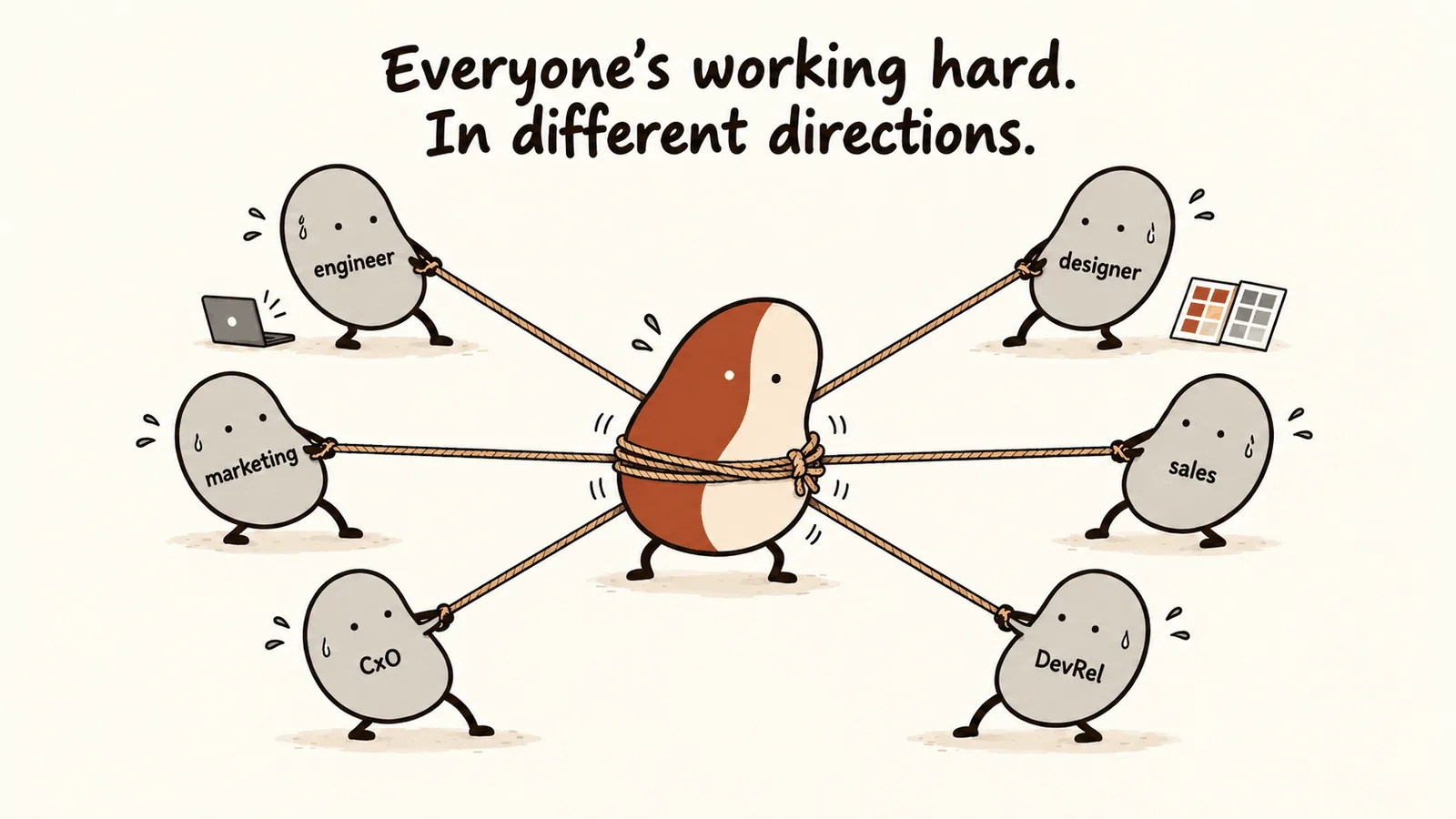
So we tried other ways. We brought in a Chief Commercial Officer (CCO), hoping a higher-level strategy would loosen up an execution side that felt rigid and reactive. Around the same time we hired a developer relations lead (DevRel) to grow a community and give the product a distribution channel. The plan, put simply: hire different roles, give each one its own piece and its own KPI, and let all of them together solve go-to-market.
Why does a bigger team make you slower?
Looking back, the problem was never the people we hired. It was the plan itself. For an early startup, a team of specialists that is supposed to add up to go-to-market is dangerous, because the founder ends up spending most of their energy on hiring and building the team.
You might ask: what’s wrong with that?
Picture yourself driving a car you assembled from spare parts. The road is rough, and the people in the back are about to be thrown out. So you steer with one hand and hold everyone in with the other.
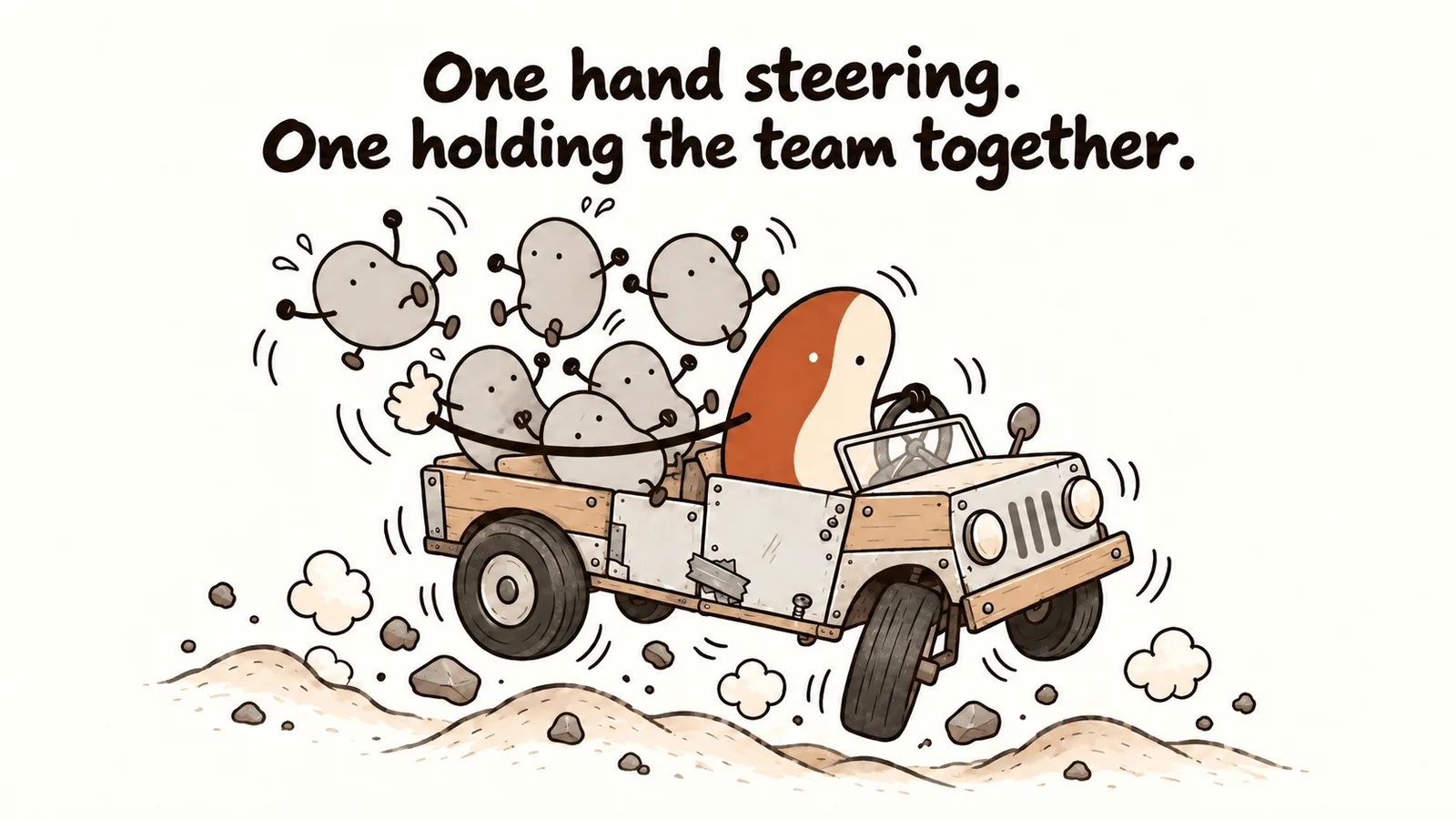
Every early startup goes through an ugly phase like this, fixing the car while it’s moving. The more people on board, the more things break, and the more your attention gets pulled toward questions like:
“I’m running out of energy. Should I hire someone better to take this off me?”
“How do I optimize my team?”
And then it becomes a loop. Many roles, but not one body. Each role pushing in its own direction, pulling against the others, or worse, spinning in place.
What an early startup should fear most is friction from the inside. I don’t mean people not getting along. I mean roles split too early. Every new role is one more line that has to be kept aligned, and the cost of communication and management piles up, layer on layer, until it crushes the one advantage a startup has: iterating fast.
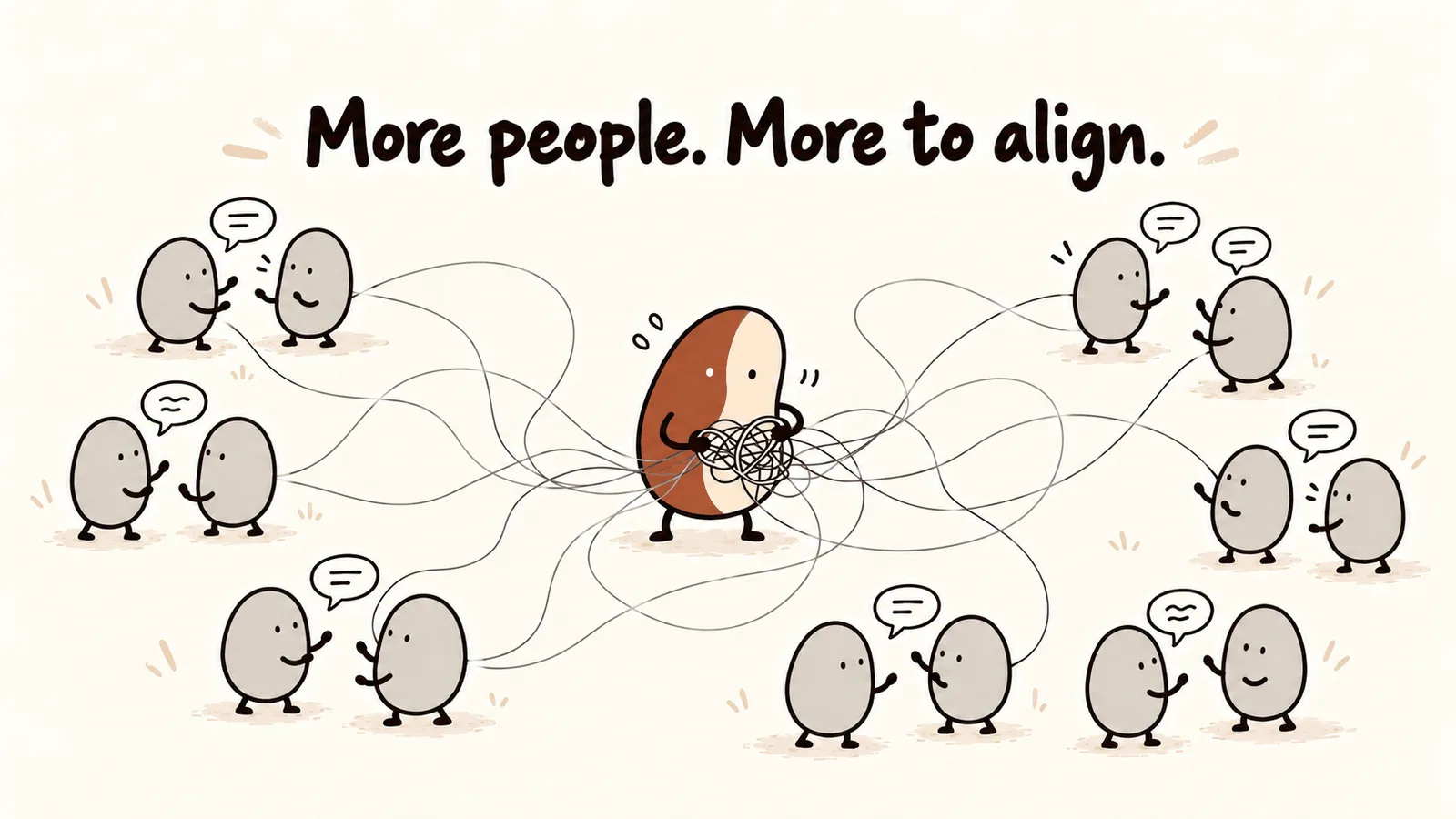
That’s the cost we underestimated. Aligning, hiring, one-on-ones, explaining the direction again. All of that was time that should have gone to customers and the product. We had more people, and our execution got weaker.
Before PMF, a company has exactly one job: work out who the customer is, what they actually want, and why they’d pay. Every person you add dilutes the founder’s focus a little more.
It wasn’t just us. Startup Genome’s 2011 report found that 74% of high-growth internet startups fail because they scale too early. And Pete Koomen, a YC partner, says it in his Startup School talk on enterprise sales: sales before product-market fit is fundamentally entrepreneurial. It takes vision, the customer’s trust, a lot of experiments, and a tight loop with whoever builds the product. In his words, “This is a role for founders.” It can’t be handed off yet.
How we bit the bullet
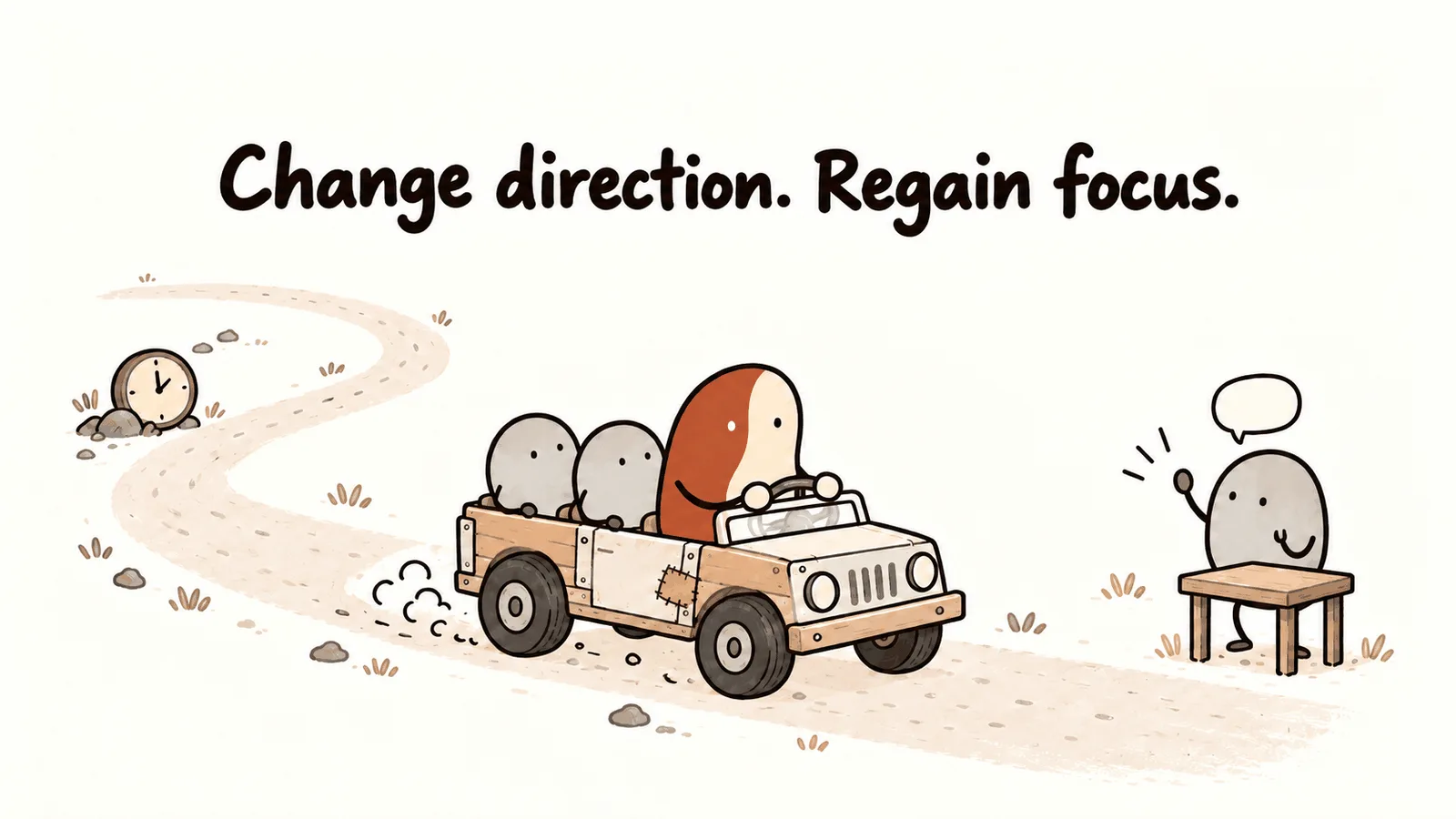
Once we saw it, we deliberately made the team smaller, looked after the people who had to leave, and refocused.
I could feel it almost immediately. The sense of control came back.
It was a painful call and the right one, and it still cost us. Growing and then shrinking has a price, and the most expensive part was time.
Looking back, I think this is close to a rite of passage for an early company. Nobody knows the answer at the start. What matters is whether, once you notice you’ve drifted, you admit it quickly and correct it quickly.
Fight your instincts
The psychologist Jonathan Haidt has an image for this: we like to think the rider steers the elephant. More often, the elephant has already turned, and the rider is explaining why.
And it isn’t one decision. It’s a slippery slope, the frog in slowly warming water. Every step makes sense on its own, and every step moves you a little closer to your comfort zone. The most deceptive part is that everyone looks busy, and you tell yourself every company has its ups and downs. In reality, your gut has stopped telling you what’s actually going on. By the time you look back, you’re a long way from what a founder is supposed to be doing, and your focus is gone.
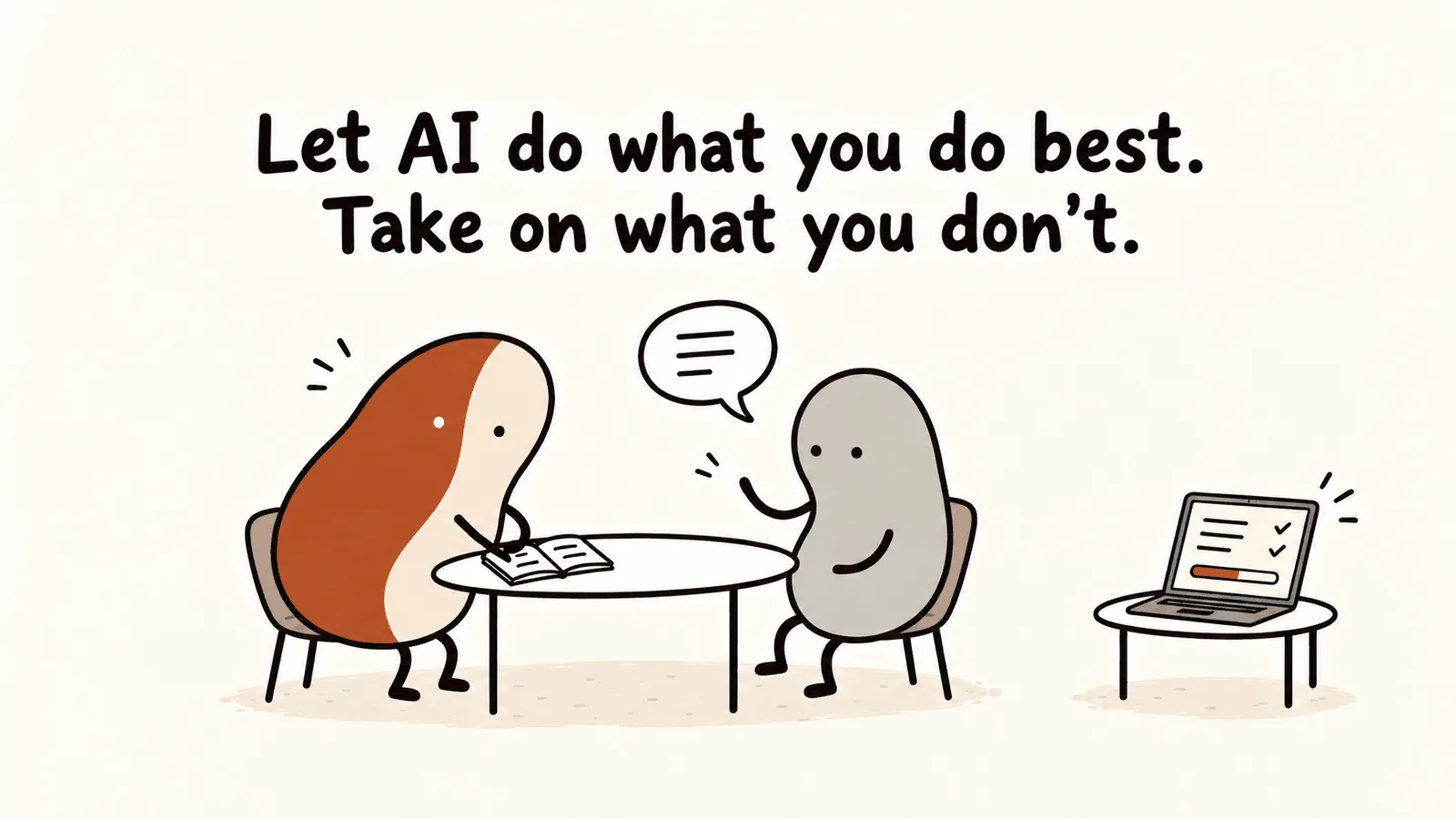
“I should spend my time on what I’m good at.” It isn’t wrong. But early in a startup, it’s counterintuitive. A founder has to protect their focus, their attention and their execution on purpose, even when it’s uncomfortable. Automate the things you’re good at, and spend your own time on the things you’re not.
Hiring won’t patch your weak spots. A founder’s weak spot is the company’s weak spot.
I'm Xiaofei. These days I build Pingbo, a product I use myself, and write about focus and execution for founders, hoping to save you a few detours. Come find me on X or Threads.